
Current Affairs Science and Technology January 2025
This comprehensive article covers the most significant science and technology events of January 2025. It gives detailed information about the innovations that are influencing the future, from ground-breaking inventions to significant historical turning points. Stay updated on key advancements in fields like space exploration, artificial intelligence, medical research, and environmental science that made headlines this month.
- India’s First Green Hydrogen Hub
- Third satellite launch pad at Sriharikota.
- India’s Spadex Mission: fourth country to successfully dock in space.
- Jeff Bezos’ space company Blue Origin successfully launched the New Glenn rocket.
India’s First Green Hydrogen Hub in Pudimadaka
On January 8, 2025, Prime Minister Narendra Modi laid the foundation stone for the Green Hydrogen Hub of NTPC Green Energy Limited (NGEL) in Pudimadaka, Anakapalli district, near Visakhapatnam in Andhra Pradesh. This initiative underscores India’s commitment to sustainable energy and positions Visakhapatnam as a pivotal center in the global green hydrogen economy.
Project Overview
The Visakhapatnam Green Hydrogen Hub is a joint venture between NTPC Green Energy Limited (NGEL) and the New and Renewable Energy Development Corporation of Andhra Pradesh (NREDCAP). This hub is India’s first green hydrogen hub under the National Green Hydrogen Mission, highlighting the country’s resolve towards clean energy adoption.
Investment and Capacity
- Estimated Investment: ₹1.85 lakh crore
- Renewable Energy Capacity: 20 gigawatts
- Production: 1,500 tons per day (TPD) of green hydrogen and 7,500 TPD of green hydrogen derivatives (including green methanol, green urea, and sustainable aviation fuel).
- Primary Objective: Export market
Strategic Importance
- Location Suitability: The project benefits from Visakhapatnam’s proximity to the coastline and its robust port infrastructure, making it an ideal location for the green hydrogen hub.
- Technology: The facility will employ advanced electrolysis technology, powered entirely by renewable sources like solar and wind energy.
- Objective: To transform India’s industrial and transportation sectors by providing sustainable energy alternatives.
Economic and Environmental Impact
- Employment: The project will generate thousands of direct and indirect jobs.
- Greenhouse Gas Emissions: It will reduce millions of tons of greenhouse gas emissions annually, aligning with India’s updated Nationally Determined Contributions (NDC) under the Paris Agreement.
Future Prospects
This initiative is a crucial part of the National Green Hydrogen Mission, which aims to produce 5 million tons of green hydrogen annually by 2030. The mission is focused on enhancing energy self-sufficiency and reducing reliance on imports. This project is a significant step towards establishing India as a global supplier of green hydrogen and its derivatives.
By setting up this green hydrogen hub, India is advancing its sustainable energy goals while creating new opportunities in the renewable energy sector, paving the way for a cleaner, greener future.
What is the National Green Hydrogen Mission
India has embarked on an ambitious journey to become a global leader in clean energy through the National Green Hydrogen Mission. This transformative initiative aims to establish the country as a hub for the production, utilization, and export of green hydrogen and its derivatives. By advancing this mission, India is poised to achieve self-reliance (Aatmanirbhar Bharat) in clean energy while contributing to global efforts for a sustainable future. Here is an in-depth look at the mission and its objectives.
Mission Objectives and Vision
The National Green Hydrogen Mission seeks to:
- Position India as a global hub for green hydrogen production and exports.
- Promote significant decarbonization of the economy.
- Reduce dependence on fossil fuel imports, enhancing energy security.
- Establish technology and market leadership in green hydrogen.
This initiative aligns with India’s commitment to fostering clean energy transitions and combating climate change.
Key Components of the Mission
- Demand Creation
- Exports: The mission focuses on creating a supportive ecosystem for green hydrogen exports through strategic partnerships and enabling policies.
- Domestic Consumption: The Government of India will mandate a minimum share of green hydrogen consumption for designated industries, such as energy and feedstock. An Empowered Group (EG) will oversee and set annual targets for consumption trajectories.
- Competitive Bidding: Demand aggregation and procurement of green hydrogen and green ammonia will be facilitated through a competitive bidding framework.
- Certification Framework: The Ministry of New and Renewable Energy (MNRE) will establish regulations to certify green hydrogen production using renewable energy sources.
- Strategic Interventions for Green Hydrogen Transition (SIGHT) To catalyze the transition, the mission allocates ₹17,490 crore (up to 2029-30) for two key financial incentives:
- Electrolyser Manufacturing: Incentives to boost domestic manufacturing of electrolysers, essential for green hydrogen production.
- Green Hydrogen Production: Direct support for green hydrogen producers to make the sector competitive globally.
- Pilot Projects
- Low-Carbon Steel Projects: Allocated ₹455 crore (up to 2029-30).
- Mobility Projects: Allocated ₹496 crore (up to 2025-26).
- Shipping Projects: Allocated ₹115 crore (up to 2025-26).
- Additional target areas include decentralized energy applications, biomass-based hydrogen production, and advanced hydrogen storage technologies.
- Green Hydrogen Hubs
- The mission identifies and supports regions with potential for large-scale green hydrogen production and utilization, establishing them as Green Hydrogen Hubs.
- At least two hubs are planned in the initial phase, with a budget of ₹400 crore (up to 2025-26).
official Source: Ministry of New and Renewable Energy (MNRE)
India’s New Third Satellite Launch Pad to Boost Space Capabilities at Sriharikota

In a significant move for India’s space exploration ambitions, the Central Government has approved the construction of a third launch pad at Sriharikota, Andhra Pradesh on January 16. The Cabinet sanctioned an investment of Rs 3,985 crore for the development of this crucial infrastructure. The new launch pad will be designed to accommodate the demands of next-generation launch vehicles (NGLV), expanding India’s capacity to send heavier satellites and spacecraft into orbit.
Enhancing India’s Space Infrastructure
Sriharikota, India’s only spaceport, currently houses two launch pads. The first, built 30 years ago, is primarily used for launching smaller vehicles like the Polar Satellite Launch Vehicle (PSLV) and the Small Satellite Launch Vehicle (SSLV). The existing infrastructure has supported more than 60 successful missions to date. However, to stay competitive in the rapidly advancing field of space exploration, there is a growing need for more launch capabilities.
The newly approved third launch pad will cater specifically to the requirements of India’s NGLV, a next-generation vehicle under development by the Indian Space Research Organisation (ISRO). This vehicle is expected to handle larger payloads, including heavy satellites, paving the way for more ambitious missions. With this new addition, the launch frequency and satellite capacity can be significantly increased, strengthening India’s position in the global space community.
Key Features of the New LaunchPad
The proposed launch pad will be equipped to handle both the NGLV and the current heaviest vehicle in India’s arsenal, the LVM3, which uses semi-cryogenic engines. The construction of the launchpad is expected to take four years, with the development cost covering not only the pad itself but also essential facilities such as vehicle assembly, satellite preparation, and fuelling.
This move aligns with India’s long-term space goals, including the development of the Bharatiya Antariksh Station (BAS) by 2035 and plans to send an Indian astronaut to the moon by 2040. The addition of the third launch pad will play a key role in these future-ready initiatives, ensuring ISRO has the necessary infrastructure to meet these ambitious objectives.
A Strategic Move for India’s Space Future
The approval of the third launch pad comes at a time when ISRO is achieving notable milestones, including the completion of a historic docking experiment. With the Indian space agency continuing to push the boundaries of space exploration, this new launch pad is a crucial step toward ensuring that India can support heavier, more complex missions in the coming decades.
ISRO’s SpaDeX Mission: India became the fourth country to dock two spacecraft successfully
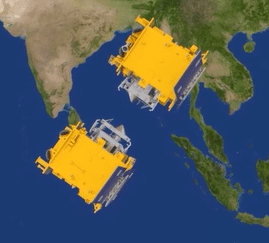
On December 30, 2024, ISRO launched the highly anticipated Space Docking Experiment (SpaDeX) mission from the Satish Dhawan Space Centre in Sriharikota, marking a significant milestone in India’s space exploration journey. The mission, launched aboard the PSLV-C60 rocket, successfully deployed two small spacecraft into a 470 km orbit above Earth, making India the fourth country to successfully demonstrate in-space docking technology, after Russia, the United States, and China.

This mission is a precursor to India’s ambitious future space missions, including Chandrayaan-4, which aims to return lunar soil samples to Earth, and the Gaganyaan mission, where India will send its first humans into space. The success of SpaDeX is also critical for the establishment of India’s own Bharatiya Antariksh Station (BAS) and other long-term space missions.
Key Highlights of the SpaDeX Mission
1. Mission Overview
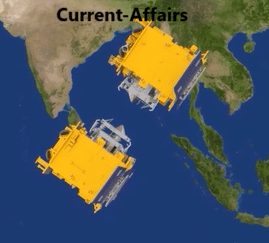
The SpaDeX mission aimed to demonstrate the technological capabilities necessary for the rendezvous, docking, and undocking of two small spacecraft—SDX-01 (the Chaser) and SDX-02 (the Target)—in low-Earth orbit. Deployed 470 km above Earth, the two spacecraft began their mission traveling at an astounding speed of approximately 28,800 km/h—10 times the speed of a bullet.
The mission was executed in multiple stages, with the spacecraft approaching each other through highly precise maneuvers, using laser range finders and visual cameras to measure distances between them, ranging from 5 km down to 0.25 km, and eventually docking at a distance of just 0 meters.
2. Docking and Power Transfer
Once the two spacecraft successfully docked, a critical part of the mission was to demonstrate the transfer of electrical power between them. This capability is essential for future space missions, particularly in the development of in-space robotics and inter-satellite power exchanges. After docking, the spacecraft were undocked, and their respective payloads began operating independently, a process expected to provide valuable data for up to two years.

3. Technological Innovation
The SpaDeX mission is a demonstration of Indigenous technologies, with ISRO showcasing several advancements:
- Docking Mechanism: A low-impact docking system with minimal approach velocity (around 10 mm/s), designed to ensure a smooth and efficient connection between spacecraft.
- Autonomous Rendezvous and Docking: Using an inter-satellite communication link (ISL), both spacecraft were able to communicate autonomously to determine the relative positions and velocity without human intervention.
- Power Transfer Technology: For the first time, India demonstrated the electric power transfer between two spacecraft in orbit.
- Rendezvous and Docking Sensors: Four sensors were used for highly precise tracking and approach.
- GNSS-based Relative Orbit Determination (RODP): This advanced system helps determine the spacecraft’s relative position and velocity without relying on Earth’s Global Navigation Satellite System.
Challenges and Resilience
The mission faced several delays during its execution. The first attempt to dock the spacecraft, scheduled for January 7, 2025, was postponed due to technical issues, followed by another delay on January 9. However, after overcoming these challenges, ISRO successfully completed the docking experiment in the early hours of January 16, 2025, proving India’s ability to master complex space operations. The new ISRO chairperson, V Narayanan, congratulated the space agency team for making the achievement possible.
Importance for Future Missions
The success of the SpaDeX mission is pivotal for several upcoming space missions. Here’s how SpaDeX contributes to India’s space ambitions:
- Chandrayaan-4: One of the most exciting future missions for India, Chandrayaan-4 will rely on this docking technology to bring lunar soil samples back to Earth. SpaDeX’s successful docking provides the foundation for future autonomous rendezvous operations in lunar space.
- Gaganyaan: India’s manned space mission will also require in-space docking capabilities for assembling modules and conducting repairs in orbit. SpaDeX demonstrated the first step toward that technology.
- Bharatiya Antariksh Station (BAS): The establishment of India’s own space station is another long-term goal, and SpaDeX will be crucial in the development of docking systems for space station assembly and operations.
Global Recognition for ISRO
With SpaDeX’s success, India has joined the exclusive group of countries—Russia, the United States, and China—that have successfully demonstrated in-space docking. This achievement places India firmly on the global space map, paving the way for future missions that will push the boundaries of human space exploration and scientific discovery.
ISRO Statement after the Achievement
“Docking of spacecrafts completed successfully! A historic moment. Let’s know the docking process: The distance between the spacecrafts was brought down from 15 meters to 3 meters. Docking was initiated with precision, which led to the capture of the spacecraft. Docking was completed successfully. India became the fourth country to achieve successful space docking. Congratulations to the entire team! Congratulations to India! After docking, the control of the two spacecraft as a single object was successful. Undocking and power transfer checks will be done in the coming days”.
As ISRO continues to push the frontiers of space technology, the SpaDeX mission stands as a testament to the nation’s resilience, innovation, and determination to reach new heights in space exploration.
Key Takeaways from ISRO’s SpaDeX Mission
- Mission Overview:
- ISRO’s Space Docking Experiment (SpaDeX) was launched on December 30, 2024, using the PSLV-C60 rocket.
- Two small spacecraft, SDX-01 (Chaser) and SDX-02 (Target), were deployed at 470 km altitude in low-Earth orbit.
- India’s Space Milestone:
- India became the fourth country (after Russia, the U.S., and China) to successfully demonstrate in-space docking technology.
- Technological Demonstrations:
- The primary objective was to test rendezvous, docking, and undocking of two spacecraft in space.
- Electric power transfer between the docked spacecraft was successfully demonstrated.
- Indigenous technologies included autonomous rendezvous systems, dockings sensors, and GNSS-based orbit determination.
- Mission Delays and Resilience:
- The docking, initially planned for January 7, 2025, was delayed twice due to technical issues but successfully completed on January 16, 2025.
- Significance for Future Missions:
- The SpaDeX mission is crucial for upcoming Indian missions like Chandrayaan-4 (lunar sample return) and Gaganyaan (manned space mission).
- It is also a precursor for the Bharatiya Antariksh Station (BAS) and other long-term space exploration goals.
- Global Recognition:
- ISRO’s successful docking positions India as a key player in space exploration, joining an exclusive group of countries with space docking capabilities.
- In-space Docking Mechanism:
- The docking system used is low-impact, with an approach velocity of just 10 mm/s, allowing safe and precise docking.
Jeff Bezos’ space company Blue Origin launched New Glenn Rocket
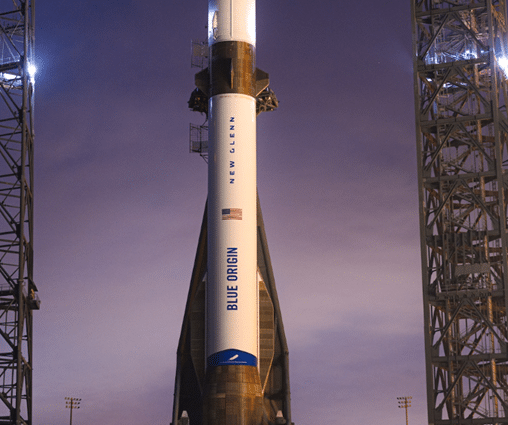
Jeff Bezos’ space company, Blue Origin, achieved a significant milestone with the successful launch of its New Glenn rocket on January 16, 2025. This marks the maiden flight of the New Glenn vehicle and brings the company one step closer to its ambitious goals in the space industry. Here’s a summary of the key points from this historic event.
Key Highlights of Glenn Rocket
1. A Historic Launch at Cape Canaveral Blue Origin’s New Glenn rocket lifted off at 2:03 a.m. EST on January 16, 2025, from the Cape Canaveral Space Force Station. The launch took place on the same historic pad used for previous space missions, including the Mariner and Pioneer spacecraft that launched 50 years ago.
2. Mission Success Despite earlier delays, the New Glenn rocket successfully completed its mission, reaching orbit approximately 12.5 minutes after launch. The rocket successfully deployed a prototype satellite into orbit, marking a significant achievement in Blue Origin’s journey toward space exploration.
3. A Reusable Orbital-Class Rocket The New Glenn is designed as a reusable orbital-class rocket. At 98 meters in height (320 feet), the rocket is intended to carry large payloads and, in the future, astronauts to the Moon. This vehicle’s reusability is a key factor in Blue Origin’s efforts to reduce the cost of space travel.
4. First-Stage Testing The rocket’s first stage is equipped with Blue Origin’s BE-4 engines. During this launch, the rocket’s first stage underwent rigorous testing, including an attempt to land on a recovery ship named “Jacklyn” in the Atlantic Ocean. While the booster did not successfully land, the reentry burns were executed as planned, providing valuable data for future missions.
5. Design and Payload Capabilities The New Glenn rocket is capable of carrying up to 50 tons of payload to low Earth orbit (LEO). This makes it a strong competitor to SpaceX’s Falcon Heavy, though New Glenn’s payload capacity is slightly less. However, its key advantage lies in its reusability, with plans to allow up to 25 launches per booster, making it a cost-effective option for future space missions.
6. Future of the New Glenn Rocket Looking ahead, Blue Origin envisions the New Glenn rocket as a critical vehicle for future space exploration. It is designed to support both crewed and uncrewed missions, with long-term plans to transport astronauts to destinations like the Moon. The successful test flight brings Blue Origin closer to competing with other private space companies, such as SpaceX, in the race for space dominance.
Key Points to be remembered
Rocket Name and Significance
- Name: New Glenn, named in honor of John Glenn, the first American to orbit Earth.
- Size: The rocket stands at 320 feet (98 meters) tall, making it five times larger than Blue Origin’s previous rockets.
- Significance: First reusable rocket by Blue Origin; designed for lunar missions and satellite launches.
Payload and Mission Duration
- The rocket carried a prototype satellite, which remained inside the second stage for this test flight.
- The mission lasted six hours, with the second stage placed into a safe, high orbit to minimize space debris.
Reusability and Efficiency
- New Glenn is engineered as a reusable orbital-class rocket, a key feature aimed at reducing costs for future missions.
- The first stage is designed to be reusable for up to 25 launches, reducing cost.